I home roasted 100 batches of coffee in 2024, and here are ten things l’ve learned:
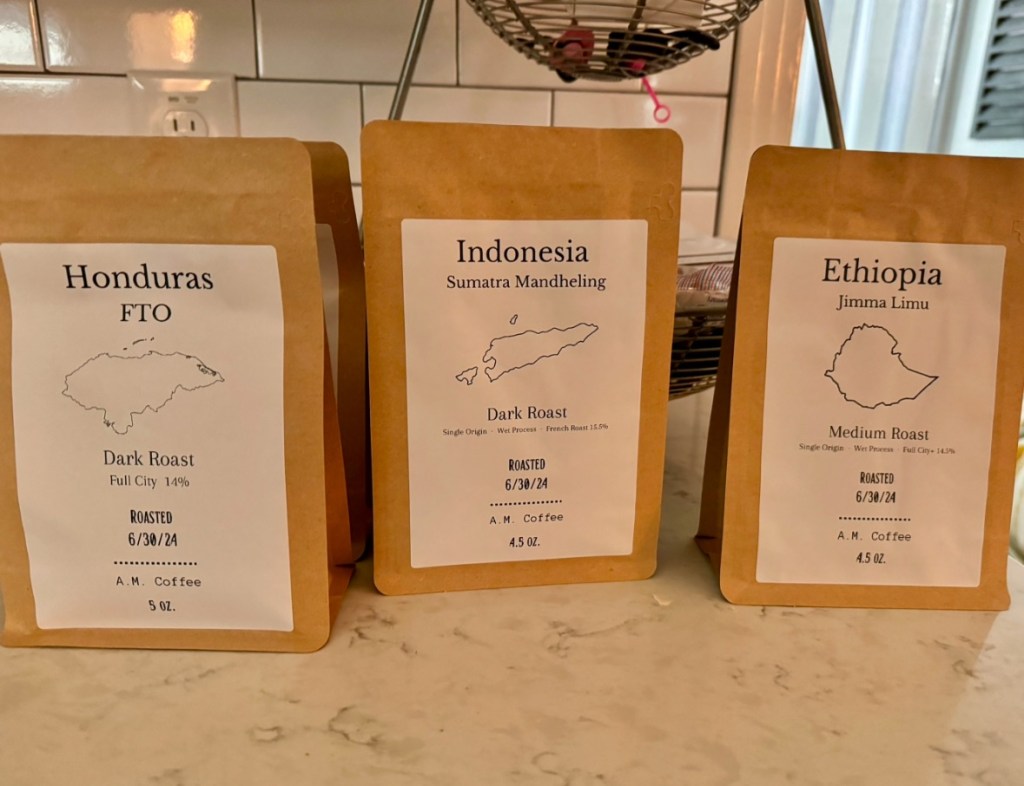
A lighter or darker roast is best determined not by the external color but by total weight loss during the roasting process. Just a few percentage points makes the difference between light and dark roasts!
The altitude a coffee is grown makes just as much of a difference as the country of origin. Maybe more.
It takes a lot of processing before you even have green coffee beans suitable for roasting, from removal of the surrounding fruit to the drying method.
When roasting, coffee goes through three development stages: yellowing, when beans begin to develop aroma and body; browning, when sugars caramelize; and the final phase of the Maillard reaction, further reducing sugars (which is when beans get that dark color you’re accustomed to).
You may hear two distinct cracks when roasting.
The first occurs when water turns to steam, something like a popcorn kernel. If you continue roasting long enough to hear a second crack, oils and other gasses are released, resulting in a darker roast.
Finished beans are best used between 2 to 12 days after roasting. Those additional days allow for further releasing of carbon dioxide after roasting.
Most often, older generations ask me for a “bold” (dark) roast, while younger generations who grew up in the third wave coffee era prefer lighter roasts and more acidity.
Many coffee drinkers haven’t tasted coffee from specific geographies. Stores and shops typically prepare blends from multiple regions.
Although coffee has been popular for centuries, the “coffee taster’s flavor wheel” was only formalized in 1995.
Even with many independent coffee shops roasting their own coffee, it’s not easy to buy green coffee locally. Thankful for Addison Coffee Roasters!
 Alan V Michael